Introduction
Early Life and Background
Family Details
- Father: Anand Singh Bisht, who served as a forest ranger in the Forest Department.
- Mother: Savitri Devi
- He belongs to a middle-class Garhwali Rajput family and was raised with strong values of discipline and simplicity.
From an early age, he showed interest in spirituality, social service, and leadership.
Educational Qualification
Academic Background
- Degree: Bachelor of Science (B.Sc.)
- Specialization: Mathematics
- University: Hemvati Nandan Bahuguna Garhwal University
His education helped develop a logical and disciplined mindset, which later reflected in his administrative decisions.
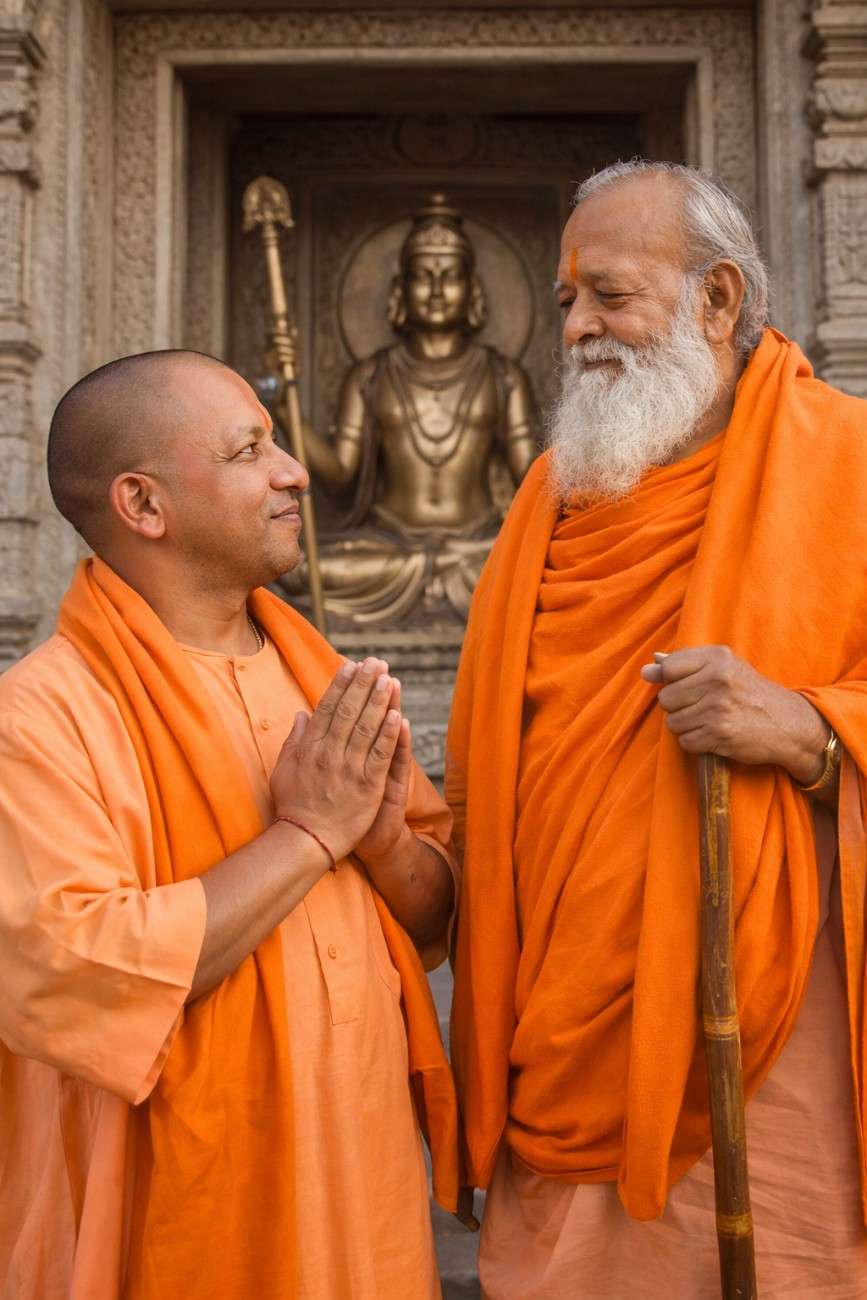
Spiritual Journey and Association with Gorakhnath Math and Political Career
Becoming a Monk
- He took sanyas (monkhood) in the early 1990s
- He became a disciple of Mahant Avaidyanath, who was the chief priest of the Gorakhnath Math in Gorakhpur.
After years of dedication and service, he was appointed as the Mahant (Head Priest) of Gorakhnath Math, one of the most respected religious institutions in North India.
Entry into Politics
First Electoral Victory
- Year: 1998
- Constituency: Gorakhpur (Lok Sabha)
- Became one of the youngest Members of Parliament at the age of 26
He represented Gorakhpur in the Lok Sabha multiple times, winning consecutive elections due to strong grassroots support.
Role in Indian Politics
Political Identity
- Strong advocate of law and order
- Focus on cultural heritage, infrastructure, and development
- Known for decisive actions against crime and corruption
His leadership style has earned him both praise and criticism, making him a widely discussed political figure.
Historic Achievements
- Re-elected in 2022, becoming one of the few CMs to complete consecutive terms
- Focused on:
- Improving law and order
- Infrastructure development (roads, expressways, airports)
- Investment promotion and employment generation
- Administrative reforms and digital governance
His tenure marked a shift toward stricter administration and faster decision-making.
Major Initiatives and Governance Reforms
Key Areas of Work
- Crime control and police reforms
- Large-scale infrastructure projects
- Industrial investment summits
- Religious tourism development
- Welfare schemes implementation at ground level
These initiatives aimed to improve both economic growth and public safety in the state.
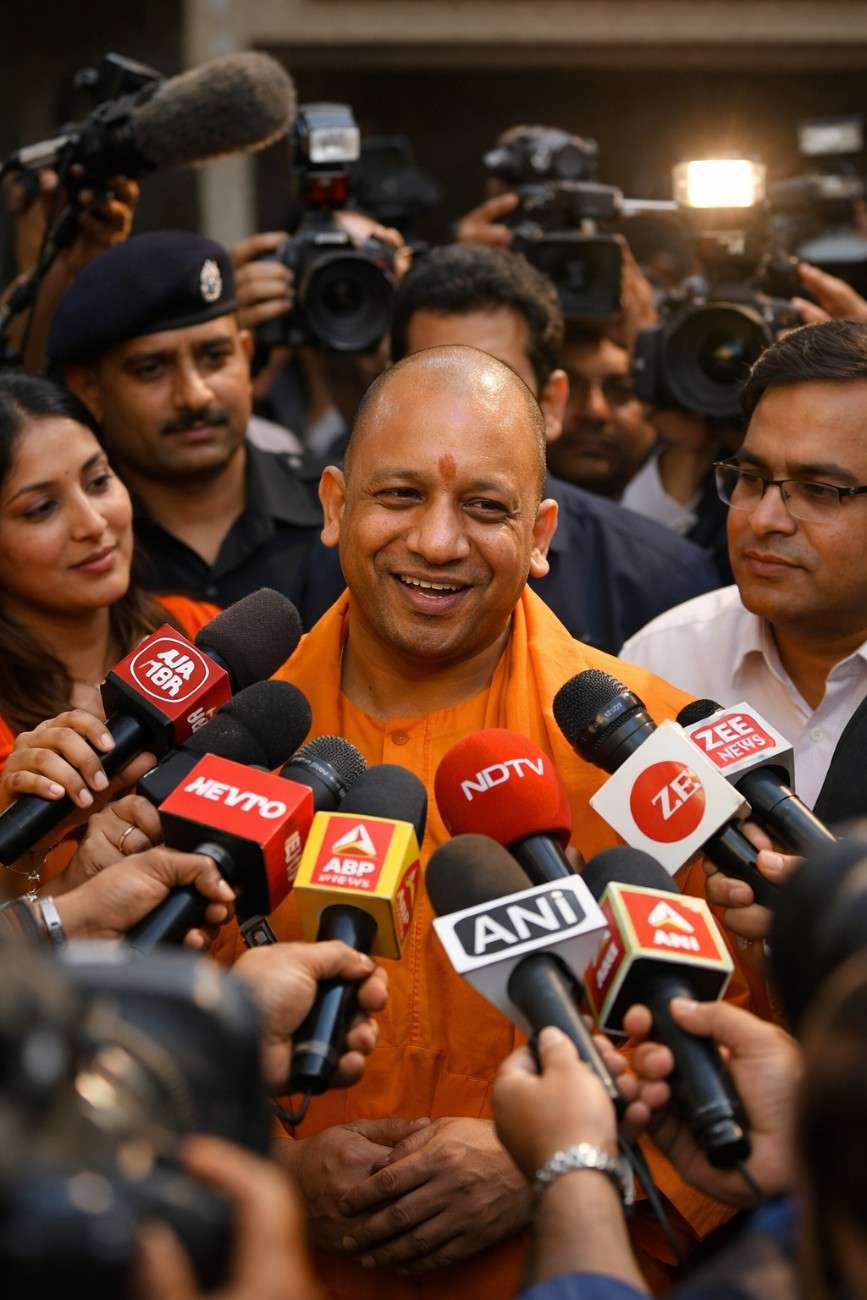
Public Image and Popularity
Why He Stands Out
- Simple lifestyle
- Direct communication
- Strong administrative control
- Clear ideological position
His leadership continues to influence political discussions at both state and national levels.
Controversies and Criticism
Public Debates and Opposition Views
- His strict law-and-order policies have been debated by opposition parties
- Certain administrative actions have attracted national and international attention
- Critics often question his hardline approach, while supporters view it as necessary governance
Despite criticism, his political base has remained strong, especially among voters who prioritize safety and discipline.
Contribution to Law and Order
Policing and Administrative Control
- Strengthening police accountability
- Fast action against organized crime
- Strict response to illegal activities and land encroachment
These measures significantly changed the perception of governance in the state and increased public confidence in administration.
Infrastructure and Development Vision
Major Development Projects
- Construction of expressways connecting major cities
- Expansion of airport facilities across the state
- Improved urban transport and road connectivity
- Smart city initiatives in key districts
These projects aimed to attract investment and create employment opportunities.
Economic Growth and Investment Policies
Industrial and Employment Initiatives
- Global Investors Summit
- Industrial corridors and MSME support
- Startup promotion and ease-of-doing-business reforms
These efforts helped position Uttar Pradesh as an emerging investment hub in North India.
Focus on Education and Social Welfare
Key Social Initiatives
- Improvement in government school infrastructure
- Digital learning and teacher accountability
- Scholarships for students from economically weaker sections
- Women and child welfare schemes
These initiatives aimed to ensure inclusive development across rural and urban regions.
Religious and Cultural Development
Promotion of Religious Tourism
- Development of pilgrimage corridors
- Infrastructure upgrades around major religious sites
- Promotion of spiritual tourism for economic growth
This approach helped boost tourism while preserving traditional values.
Leadership Style and Work Ethic
Personal Traits
- Minimalist living
- Long working hours
- Direct involvement in administrative reviews
- Clear communication with officials
His leadership style reflects a mix of spiritual discipline and administrative firmness.
Influence on National Politics
Political Significance
- Recognized as a strong mass leader
- Frequently mentioned in national political debates
- Influences policy discussions within the BJP
His governance model is often cited as a case study in decisive administration.
Awards and Recognition
Notable Mentions
- Appreciation for law and order improvements
- Recognition for infrastructure growth
- Acknowledgment for investment promotion efforts
These recognitions highlight his administrative impact rather than personal accolades.
Personal Life and Interests
Lifestyle
- Follows a monk’s routine
- Avoids luxury and public display
- Deeply involved in spiritual practices
His personal conduct aligns closely with his public image.
Legacy and Long-Term Impact
Long-Term Changes
- Stronger governance framework
- Improved public perception of safety
- Faster execution of development projects
His tenure continues to influence how governance is perceived in large Indian states.