Indroduction
For years, parents in Delhi have raised concerns over unpredictable and often steep fee increases in private schools. Annual hikes without clear justification, additional charges under multiple heads, and limited communication from school managements created frustration and financial stress for families. Addressing these long-standing issues, the Delhi Government has taken a decisive step by making it mandatory for all private schools to establish fee-regulation committees. This move aims to bring transparency, accountability, and fairness into the fee determination process while safeguarding the interests of parents and students alike.
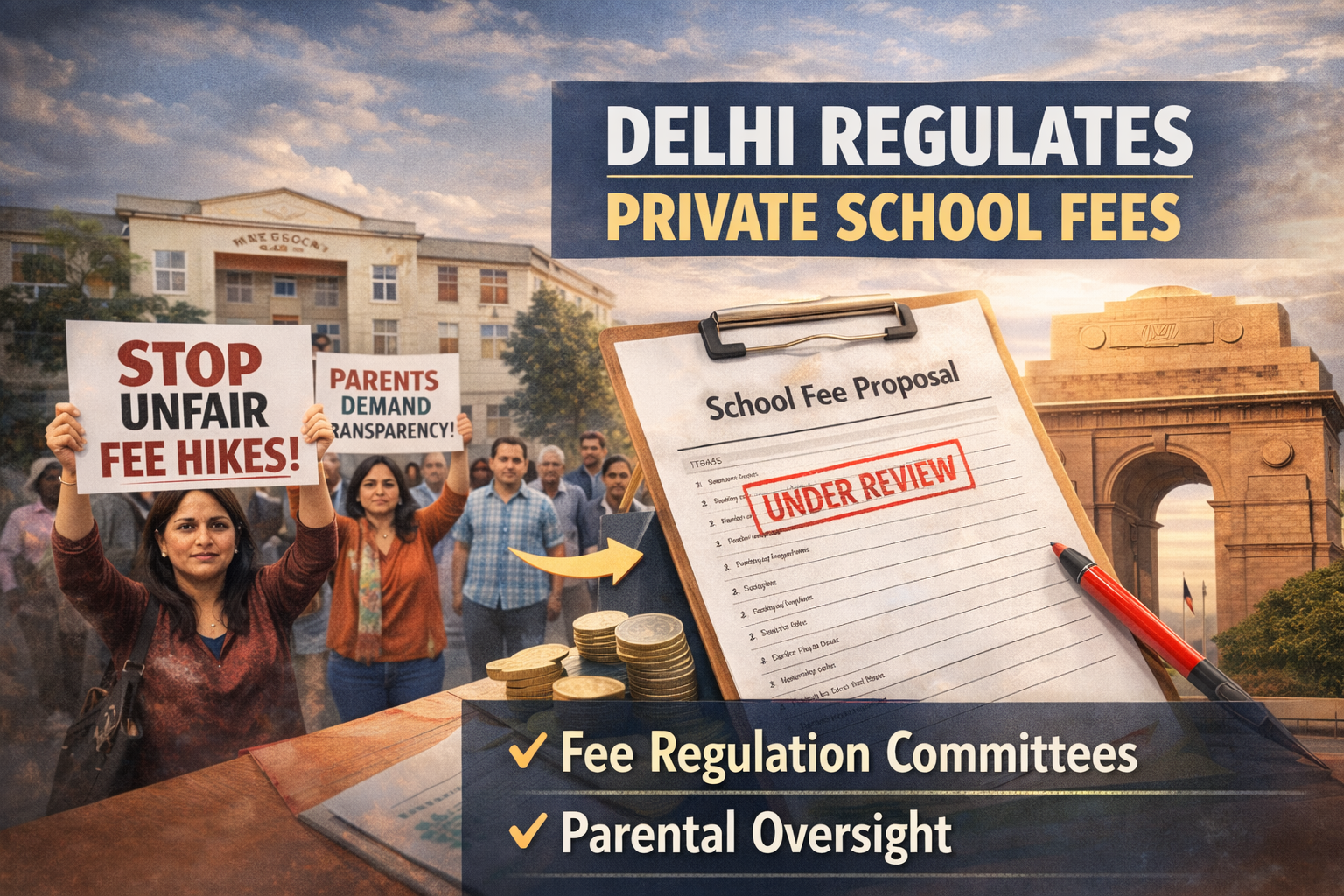
Under the latest directive, every private school in Delhi must form a fee-fixation or fee-regulation committee by January 10, 2026. These committees will be responsible for reviewing, discussing, and approving any changes in the school’s fee structure.
The objective is clear:
- Prevent arbitrary fee hikes
- Ensure transparency in financial decisions
- Encourage dialogue between parents and school authorities
- Create a structured and accountable system for fee determination
This policy marks a shift from unilateral decision-making to a participatory and regulated approach.
Over the past decade, private education has become increasingly expensive, placing a heavy burden on middle- and lower-income families. While operational costs for schools do rise, many parents felt that fee hikes were often disproportionate and poorly explained.
The absence of a formal oversight mechanism allowed:
- Sudden and unexplained fee increases
- Non-academic charges with little clarity
- Rising disputes between parents and school managements
The government’s intervention was therefore essential to restore balance and trust in the education system.
Structure of the Fee-Regulation Committee
To ensure fairness and neutrality, the fee-regulation committee will include representatives from multiple stakeholders.
Proposed Members Include:
- Representatives from the school management
- Elected parent representatives
- The school principal or head
- Additional members as required under government guidelines
This balanced structure ensures that decisions are not dominated by a single authority and that parents have a meaningful voice in the process.
How Will the Fee Approval Process Work?
Under the new framework, schools can no longer revise fees at will. A structured process must be followed before any increase is approved.
Key Steps in the Process:
- The school presents its financial records and expenditure details
- Reasons for the proposed fee increase are clearly explained
- Committee members review and discuss the proposal
- Parent representatives share feedback and concerns
- A documented decision is made after mutual agreement
This process ensures that fee increases are reasonable, justified, and transparent.
Benefits for Parents and Students
- Protection against unjustified fee hikes
- Clear understanding of how school fees are calculated
- Increased parental participation in decision-making
- Reduced conflicts and legal disputes
- Greater financial predictability for families
Impact on Private Schools
While some schools may initially view this regulation as restrictive, it can offer long-term benefits for institutions as well.
Positive Outcomes for Schools:
- Improved credibility and public trust
- Stronger relationships with parents
- Fewer complaints and legal challenges
- Better financial discipline and planning
Transparency often leads to cooperation, which ultimately benefits the school ecosystem.
Does This Rule Apply to All Private Schools?
Yes, the directive applies uniformly to all private schools operating in Delhi, regardless of their size, reputation, or management structure. Whether a school is run by a trust, society, or private entity, compliance with this rule is mandatory.
This ensures consistency and fairness across the education sector.

Consequences of Non-Compliance
The Delhi Government has made it clear that failure to comply with the directive will invite strict action.
Possible Penalties May Include:
- Issuance of show-cause notices
- Financial penalties
- Restrictions on fee increases
- Further regulatory action in serious cases
These measures are intended to ensure full compliance and protect parental interests.
A Step Toward a Fairer Education System
Education exists to empower minds, not to function as a profit-driven business. By introducing fee-regulation committees, the Delhi Government reinforces the idea that quality education should be accessible and fairly priced.
This initiative promotes:
- Ethical governance in private education
- Social equity and affordability
- Accountability in school administration
It also sets a precedent that other states may consider adopting.
What Could Change in the Future?
With this policy in place, several long-term changes may emerge:
- Wider adoption of similar regulations in other states
- Stronger parent-school partnerships
- Improved financial transparency across institutions
- A more balanced private education framework nationwide
If implemented effectively, this decision could redefine how private schools operate in India.
Role of the Education Department in Implementation
The success of this initiative will largely depend on the active involvement of the Delhi Education Department. Beyond issuing directives, the department will be responsible for monitoring whether private schools are genuinely following the rules or merely complying on paper.
Key Responsibilities of the Education Department:
- Verifying the formation of fee-regulation committees
- Reviewing committee meeting records and decisions
- Addressing parent complaints related to fee disputes
- Ensuring timely compliance before the January 2026 deadline
This oversight will ensure that the regulation functions as a practical reform rather than a symbolic announcement.

Challenges in Ground-Level Implementation
Potential Issues Schools May Face:
- Resistance from managements used to independent decision-making
- Delays in forming committees due to internal disagreements
- Lack of financial transparency in some institutions
Possible Concerns for Parents:
- Limited awareness about their rights and role in committees
- Hesitation to voice concerns openly
- Fear of indirect consequences for students
To overcome these challenges, awareness campaigns and clear guidelines will be essential.
How Parents Can Actively Participate
This reform empowers parents, but participation is key to making it effective.
Steps Parents Should Take:
- Stay informed about school notifications and meetings
- Participate in parent representative elections
- Ask for clarity on fee components and expenditure
- Maintain written records of discussions and decisions
Active engagement will ensure that committees truly represent parental interests.
Final Conclusion
The Delhi Government’s decision to mandate fee-regulation committees in private schools is a transformative step toward fairness and accountability in education. By institutionalizing transparency and parental participation, the policy addresses long-standing grievances while preserving the autonomy of schools. If implemented sincerely, this reform has the potential to create a more equitable, trustworthy, and student-focused education ecosystem in Delhi.
Pingback: Delhi Education Minister distributes tablets to students
Pingback: Empowering Students with Tablets for a Brighter Future