PM Awas Yojana 2026: Housing is one of the most basic needs of every citizen, yet millions of families across India still live without a permanent and safe home. To address this long-standing challenge, the Government of India has once again strengthened its flagship housing scheme. The Pradhan Mantri Awas Yojana (PMAY) 2026 has officially opened new registration opportunities, offering financial assistance of up to ₹2.2 lakh to eligible beneficiaries. This renewed push aims to accelerate the mission of “Housing for All” and bring dignified living conditions to economically weaker sections and low-income families.
The PM Awas Yojana 2026 is not just a welfare scheme; it represents a long-term vision to transform urban and rural housing infrastructure. With revised guidelines, expanded coverage, and improved subsidy support, the scheme is expected to benefit lakhs of families who were previously unable to apply or were left out in earlier phases.
Understanding PM Awas Yojana 2026
Pradhan Mantri Awas Yojana was first launched with the objective of providing affordable housing to India’s poor and middle-income groups. Over the years, the scheme has evolved to address ground-level challenges such as rising construction costs, land availability, and access to institutional finance. The 2026 registration phase builds upon this experience, making the process more inclusive and transparent.
Under PMAY 2026, beneficiaries can receive financial assistance for constructing a new house, purchasing a ready home, or upgrading an existing semi-pucca structure into a permanent dwelling. The focus remains on quality housing with basic amenities such as electricity, clean drinking water, sanitation, and proper ventilation.
A Renewed Push Toward “Housing for All”
The government has reiterated its commitment to ensure that no eligible family remains homeless due to financial constraints. PMAY 2026 aligns with broader development goals, including urban planning, rural development, women empowerment, and social inclusion. By linking housing assistance with direct benefit transfer systems, the scheme ensures that funds reach beneficiaries without leakage or delays.
Key Highlights of PMAY 2026 Registration

One of the most discussed features of PM Awas Yojana 2026 is the housing assistance of up to ₹2.2 lakh. This amount is designed to reduce the financial burden on low-income households and encourage faster completion of houses.
The registration process has been simplified to allow both online and offline applications. Digital platforms have been upgraded to reduce errors and improve transparency. Beneficiaries can track their application status, payment releases, and construction progress more easily than before.
Another important highlight is the continued emphasis on women ownership. In most cases, the house must be registered in the name of a female member or jointly with a male member, promoting financial security and empowerment for women.
Who Can Apply for PM Awas Yojana 2026?
Eligibility under PM Awas Yojana 2026 is primarily based on income category, housing status, and family structure. The scheme is targeted toward families who do not own a pucca house anywhere in India. Both urban and rural households are covered under different components of the scheme.
Economically Weaker Sections (EWS), Low Income Groups (LIG), and selected Middle Income Groups (MIG) are eligible based on their annual household income. The government has clarified that applicants must meet Aadhaar verification requirements and should not have previously availed housing benefits under any central or state government scheme.
Special Focus on Marginalized Communities
PM Awas Yojana 2026 continues to prioritize socially and economically disadvantaged groups. Scheduled Castes, Scheduled Tribes, minorities, senior citizens, persons with disabilities, and families living in slums or kutcha houses receive preference during beneficiary selection. This inclusive approach ensures that housing assistance reaches those who need it the most.
Financial Assistance and Subsidy Structure
The financial support of up to ₹2.2 lakh under PM Awas Yojana 2026 is provided either as direct construction assistance or as interest subsidy on home loans, depending on the component under which the beneficiary applies. In rural areas, assistance is generally provided for house construction, while urban beneficiaries may opt for home loans with interest subsidies.
The subsidy amount significantly reduces the total cost of house construction or purchase. For families with limited savings and unstable income sources, this assistance acts as a critical support system, making homeownership a realistic goal rather than a distant dream.
Impact on Affordable Housing
The revised subsidy structure under PMAY 2026 is expected to boost the affordable housing sector. It encourages private developers, financial institutions, and local authorities to actively participate in delivering cost-effective housing solutions. This collaborative approach not only benefits beneficiaries but also contributes to employment generation in construction and allied sectors.
The registration process for PMAY 2026 has been designed to be user-friendly. Applicants can submit their details through the official online portal or approach local authorities such as municipal offices, panchayats, or common service centers.
During registration, applicants are required to provide personal details, income information, Aadhaar verification, and bank account details. Accuracy is crucial, as incorrect information may lead to application rejection or delays in approval.
After successful registration, applications are verified by local authorities, followed by beneficiary selection based on eligibility criteria and available targets. Once approved, financial assistance is released in stages linked to construction progress or loan disbursement milestones.
Urban and Rural Components Explained
PM Awas Yojana 2026 continues to operate through separate urban and rural components to address region-specific challenges. Urban areas focus on in-situ slum redevelopment, affordable housing through partnerships, and credit-linked subsidies. Rural areas emphasize new house construction with region-appropriate designs and materials.
This dual approach ensures that housing solutions are practical and sustainable, whether in densely populated cities or remote villages. Local conditions, climate, and lifestyle needs are taken into account while planning and approving housing projects.
Benefits Beyond Financial Support
While financial assistance is the most visible benefit of PMAY 2026, the scheme offers much more than monetary support. It promotes planned settlements, improved sanitation, and better living standards. Houses constructed under the scheme are designed to be disaster-resilient and environmentally sustainable wherever possible.
Owning a permanent house also provides families with social security, improved health outcomes, and better educational opportunities for children. Over time, this contributes to poverty reduction and social stability at the grassroots level.
Challenges and Government Measures
Despite its success, PM Awas Yojana has faced challenges such as land availability, delays in construction, and beneficiary identification issues. Learning from previous phases, the government has introduced stronger monitoring systems and better coordination between central, state, and local authorities under PM Awas Yojana 2026.
Digital tools now help overcome these challenges by improving transparency and ensuring smoother implementation of housing projects. Geo-tagging of houses, real-time progress tracking, and digital fund transfers ensure accountability and transparency throughout the implementation process.
Why PM Awas Yojana 2026 Matters
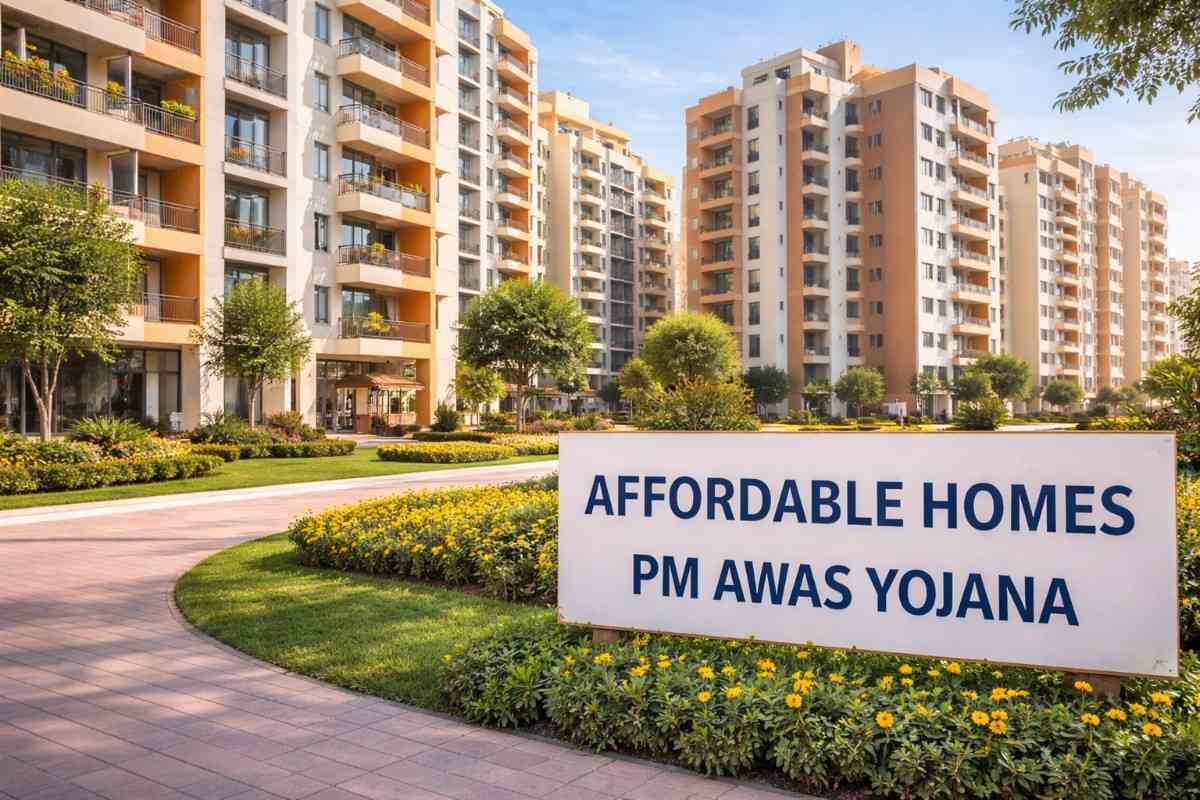
PM Awas Yojana 2026 is more than a housing scheme; it is a step toward inclusive growth and social justice. By enabling affordable homeownership, the government is laying the foundation for long-term economic stability and improved quality of life for millions of families.
As registrations begin, eligible citizens are encouraged to apply at the earliest and take advantage of the ₹2.2 lakh housing assistance. For families who have waited years for a permanent roof over their heads, PMAY 2026 offers a renewed opportunity and a hopeful future.
Documents Required for PM Awas Yojana 2026 Application
To ensure transparency and avoid duplication of benefits, the government has made documentation an essential part of the PM Awas Yojana 2026 registration process. Applicants must submit valid identity, income, and housing-related documents during verification. These documents help authorities confirm eligibility and prioritize genuine beneficiaries.
Aadhaar card plays a central role in the application process, as it is used for identity verification and direct benefit transfers. Along with Aadhaar, applicants are required to submit income proof, bank account details linked with Aadhaar, and a declaration stating that the family does not own a pucca house anywhere in India. In rural areas, additional verification may be conducted through local panchayat records, while urban applicants may need supporting documents from municipal authorities.
Proper documentation not only speeds up approval but also reduces the chances of application rejection. Beneficiaries are advised to ensure that all submitted details are accurate and consistent across records.
PMAY 2026 and the Role of State Governments
While PM Awas Yojana is a centrally sponsored scheme, state governments play a crucial role in its implementation. Each state adapts the scheme based on local housing needs, land availability, and population density. This collaborative model allows better execution and ensures that benefits reach the ground level effectively.
State governments are responsible for identifying beneficiaries, approving projects, monitoring construction progress, and coordinating with local bodies. Under PMAY 2026, states have been given greater flexibility to design housing solutions that suit regional requirements while adhering to central guidelines.
This partnership between the central and state governments strengthens accountability and improves the overall impact of the scheme, especially in underserved regions.
Employment and Economic Impact of PM Awas Yojana 2026
Beyond housing, PMAY 2026 has a significant impact on employment generation and economic growth. Large-scale housing construction creates job opportunities for skilled and unskilled workers, including masons, carpenters, electricians, and laborers. This boost to the construction sector has a ripple effect on related industries such as cement, steel, bricks, and transportation.
In rural areas, the scheme helps stabilize local economies by providing consistent employment and improving infrastructure. For many families, participation in PMAY construction activities becomes an additional source of income, further strengthening financial security.
The long-term economic benefits of PM Awas Yojana 2026 extend well beyond individual households, contributing to national development and inclusive growth.
Digital Monitoring and Transparency Measures
One of the major improvements in PM Awas Yojana 2026 is the increased use of digital technology. The government has introduced advanced monitoring tools to track construction progress, fund disbursement, and beneficiary details in real time. Houses built under the scheme are geo-tagged, ensuring physical verification and reducing misuse of funds.
Beneficiaries can now access online dashboards to check application status, installment releases, and completion timelines. This transparency builds trust in the system and empowers applicants to stay informed throughout the process.
Digital monitoring also enables authorities to identify delays or issues quickly, allowing corrective action without prolonged disruptions.
Common Reasons for Application Rejection
Despite simplified procedures, some PMAY 2026 applications may still face rejection due to avoidable errors. Incorrect income details, mismatched Aadhaar information, or incomplete documentation are among the most common reasons. In some cases, applicants may already own a pucca house, making them ineligible under scheme guidelines.
Another reason for rejection is duplication, where family members apply separately instead of submitting a single household application. To avoid such issues, applicants are encouraged to carefully review eligibility criteria and provide accurate information during registration.
Understanding these factors can help new applicants improve their chances of approval under PM Awas Yojana 2026.
Future Outlook of PM Awas Yojana
The continuation of PM Awas Yojana into 2026 reflects the government’s long-term commitment to affordable housing. With urbanization increasing rapidly and housing demand rising, schemes like PMAY will remain central to India’s development strategy.
Experts believe that future phases may further expand eligibility, introduce eco-friendly construction incentives, and strengthen urban planning integration. These measures would not only address housing shortages but also promote sustainable and resilient communities.
PM Awas Yojana 2026 sets the foundation for these future initiatives by strengthening existing frameworks and learning from past implementation experiences.
Final Thoughts on PMAY 2026 Housing Assistance
PM Awas Yojana 2026 stands as a powerful initiative aimed at transforming the housing landscape of India. By offering up to ₹2.2 lakh in housing assistance, simplifying registration, and promoting transparency, the scheme empowers millions of families to secure a permanent home.
For those who qualify, this is not just a government benefit but a life-changing opportunity. As registrations continue, PMAY 2026 remains a symbol of hope, stability, and progress for India’s underserved communities.
Pingback: PM Awas Yojana Income Limit 2026 – Who Can Apply?